SCARA Robots
A SCARA arm moves in three axes plus a rotating wrist: X, Y, Z and theta. That sounds limited until you watch one work. Because the arm is mechanically stiff in the vertical direction, a SCARA holds position under side load far better than a small six-axis arm of the same price, and it does it while cycling faster. For flat pick and place, dispensing, screwdriving and small-part assembly, that combination is usually the cheapest way to hit a cycle time.
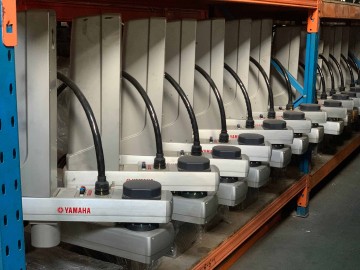
The arms in this group come from the makers that dominate the format: EPSON G, LS, RS, T and H series, YAMAHA YK series, Mitsubishi RH series, Staubli TS2 and ABB IRB 910SC, plus the FANUC SR-3iA. Payloads run from about 3 kg up to 20 kg, with reaches from 350 mm to over 1,200 mm. Most arrive with their original controller - RCX240 or RCX340 on the YAMAHA units, CR800 on the Mitsubishi units, CS9 on Staubli, IRC5 Compact on the ABB and R-30iB Mate on the FANUC.
Three numbers decide whether an arm fits your job. Payload is the total at the tool flange, including the gripper and the part - a 6 kg arm carrying a 2 kg gripper is really a 4 kg arm. Reach is measured to the tool centre point, not the wrist, so check it against the far corner of your work envelope, not the near one. Cycle time is quoted for a specific path with a specific payload, so ask for the conditions before comparing two models. If the cell needs a cleanroom or washdown version, say so early - those are different part numbers, not options.
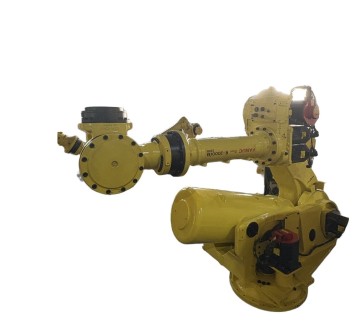
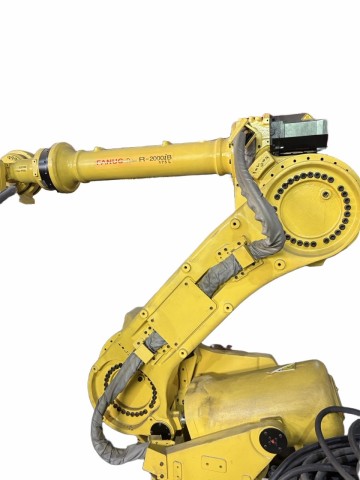
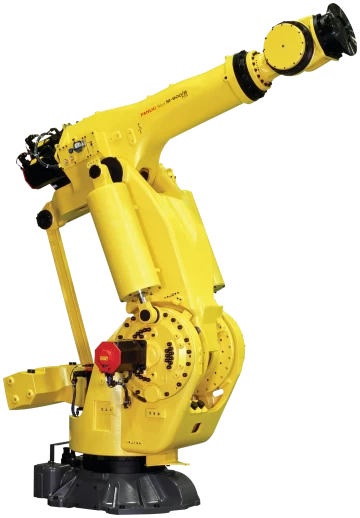
One thing a SCARA will not do is approach a part from an angle. If your process needs the tool tipped over, or the part has to be rotated out of plane, you need a six-axis arm instead. Tell us the part, the fixture height, the required rate and whether the cell is cleanroom rated. We will narrow it to the models that actually fit and confirm what is on the floor - no stock list, no guesswork.