


Welder Shortage, Meet Your Match: How Welding Robots Turn Craft into Repeatable Output
Welding robots solve the two problems that make welding hard to staff: output that depends on how many skilled welders you can hire, and weld quality that depends on who is holding the torch. This article covers where welding robots pay off, how to choose a model, what a complete welding cell actually contains, and six models FANCHENG ROBOT supplies regularly.
The shortage behind that is structural. Arc glare, fume, radiant heat, a posture held for eight hours under a helmet. Fewer young people sign up for it, and the ones who are genuinely good at it are retiring faster than they can be replaced.
At the same time, customers are tightening acceptance criteria: deeper penetration on structural work, tighter dimensional tolerances on assemblies, and a paper trail to prove both.
Rising labor cost on one side, rising quality expectations on the other. A welding robot does not solve the whole equation, but it moves two variables at once: it decouples output and consistency from how many skilled hands you can find this month.
01 Where welding robots earn their keep
The core advantage of a welding robot isn't speed. It's a high-precision path with a constant torch angle and travel speed: stable arc, even penetration, seam after seam after seam.
Any application with regular seams and repeating batches is a candidate. Five of the heaviest-use categories:
- Automotive and components — BIW spot welding, chassis and frame mixed welding
- 3C and precision devices — laser welding and brazing on small, precise seams
- Construction machinery and steel structures — excavator booms, tower crane sections, bridge components (arc welding)
- Metal furniture and e-bikes/scooters — frames, racking and tube assemblies in volume
- Agricultural machinery and marine — thick plate, multi-pass welding on large fabrications
The honest flip side: if a part has twenty short, irregular seams and gets re-fixtured five times, a robot will struggle to pay back. Fit-up and fixture design decide more projects than the robot spec sheet does.
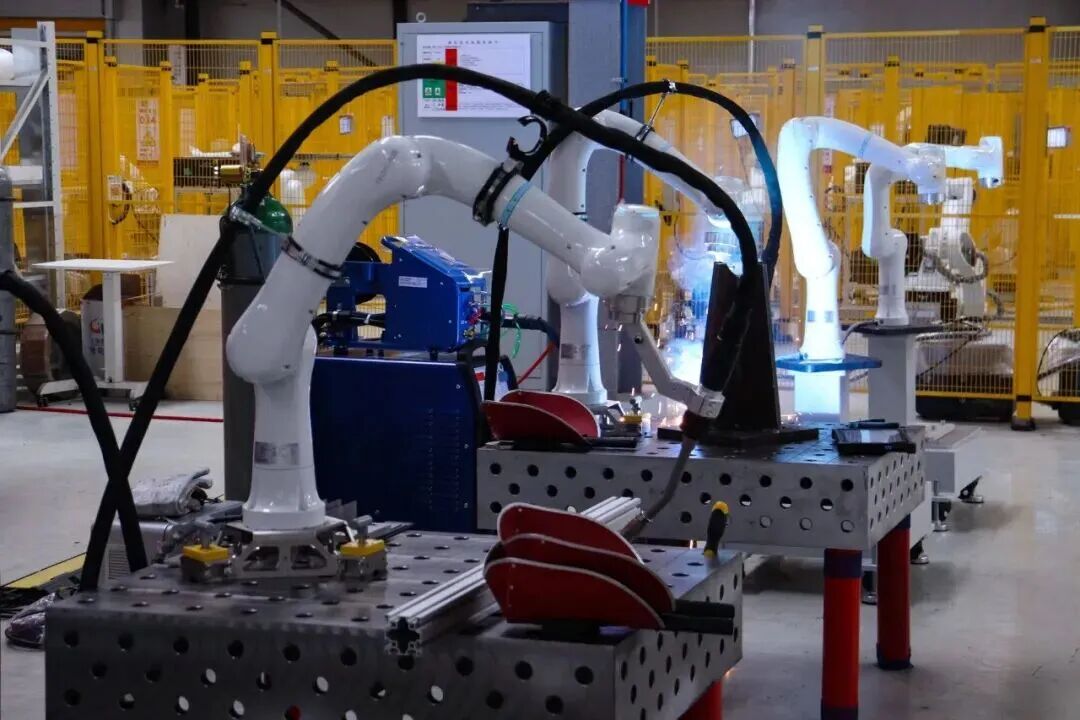
02 Four decisions before you pick a model
A welding robot can handle arc, spot, laser and brazing work. Pick the wrong platform and even a good robot is money wasted. Work through these four in order.
1. Process first. Arc (MIG/MAG), spot and laser place completely different demands on the robot. Arc welding needs a torch, wire feeder and power source matched to the material; spot welding needs a machine that can carry a heavy gun; laser welding needs very high path accuracy. Fix the process, then choose the robot.
2. Payload and reach. For arc welding, payload is rarely the constraint: torch plus cable usually falls in the 3–10 kg range. Spot welding is the opposite: a spot gun can push you into the 165–210 kg class. On reach, check the worst-case posture rather than the datasheet maximum. Roughly 1.4–1.6 m covers small parts; 2.6 m and up for large structures.
3. Accuracy and seam tracking. Thin-sheet welding is unforgiving. ±0.1 mm repeatability is the working target. Where incoming parts vary (laser-cut plate, formed sheet, hand-fit assemblies), add seam tracking or touch sensing. Without it, the robot will faithfully reproduce the deviation.
4. Ingress protection. Welding cells are spatter, dust and oil. Wrist at IP67, body at IP65 or better, plus torch cleaning and anti-spatter. Protection is a system, not a single rating.
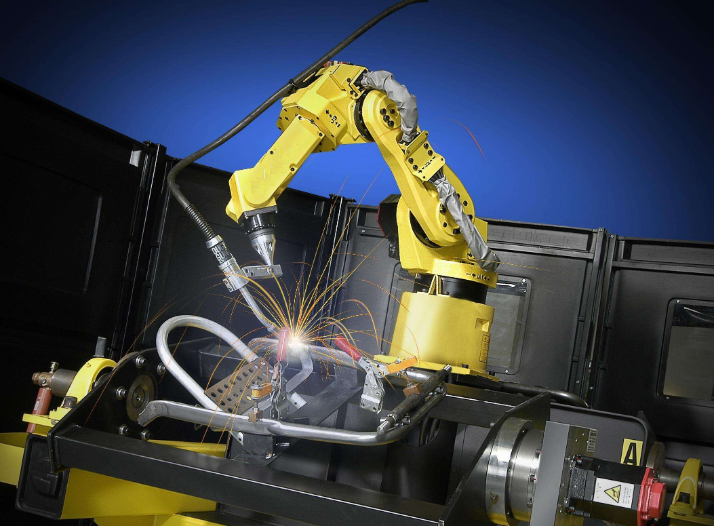
03 A welding cell is a system, not a robot
Most disappointing welding projects don't fail on the robot. They fail on the peripherals that were scoped too late or too cheaply. A complete cell typically contains:
- Robot and controller: the arm and the brain
- Welding power source and wire feeder, matched to process and material
- Torch, torch cleaning/cutting station and anti-spatter unit
- Positioner or turntable, so the seam sits in its best position
- Seam tracking and vision sensing, to absorb part variation
- Fixtures and tooling: roughly half of your positional accuracy lives here
- Fume extraction and safety fencing
- PLC cell control, tying load/unload to cycle time
Budget the whole list before committing to a robot. It's the difference between a demo and a production line.
04 Six welding models we supply regularly
FANCHENG ROBOT supplies used welding robots across 30+ brands and a continuous flow of imported units. These six come up again and again for welding work. Payload and reach for each model are listed on its product page; the exact unit, its controller and its configuration are confirmed with you before the order is finalized.
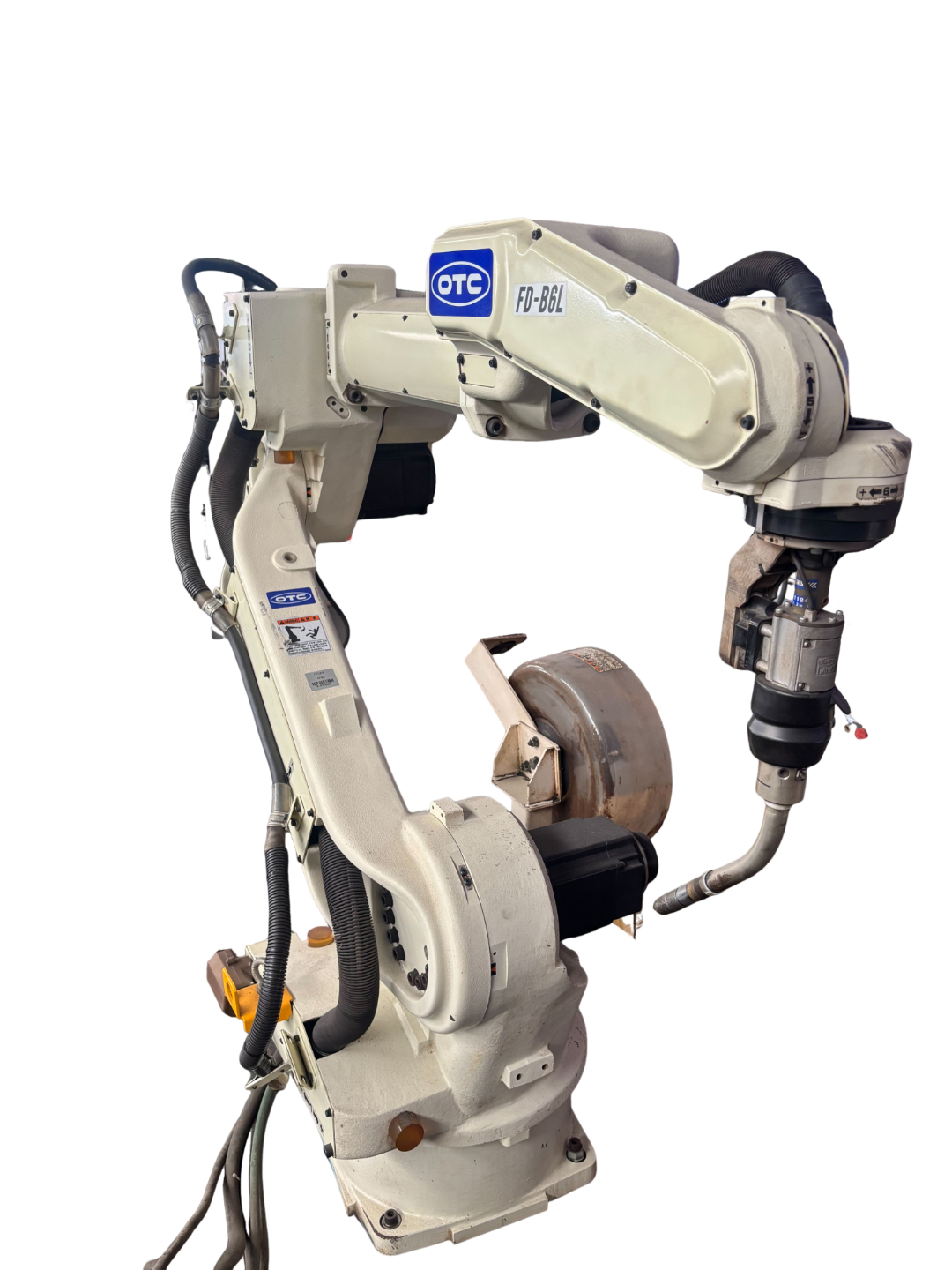
OTC FD-B6L — Long-reach arc welding specialist. Cable routed inside the arm; the slim J6 wrist snakes into deep, narrow cavities. → Medium and thin-plate structural parts, deep-groove seams.
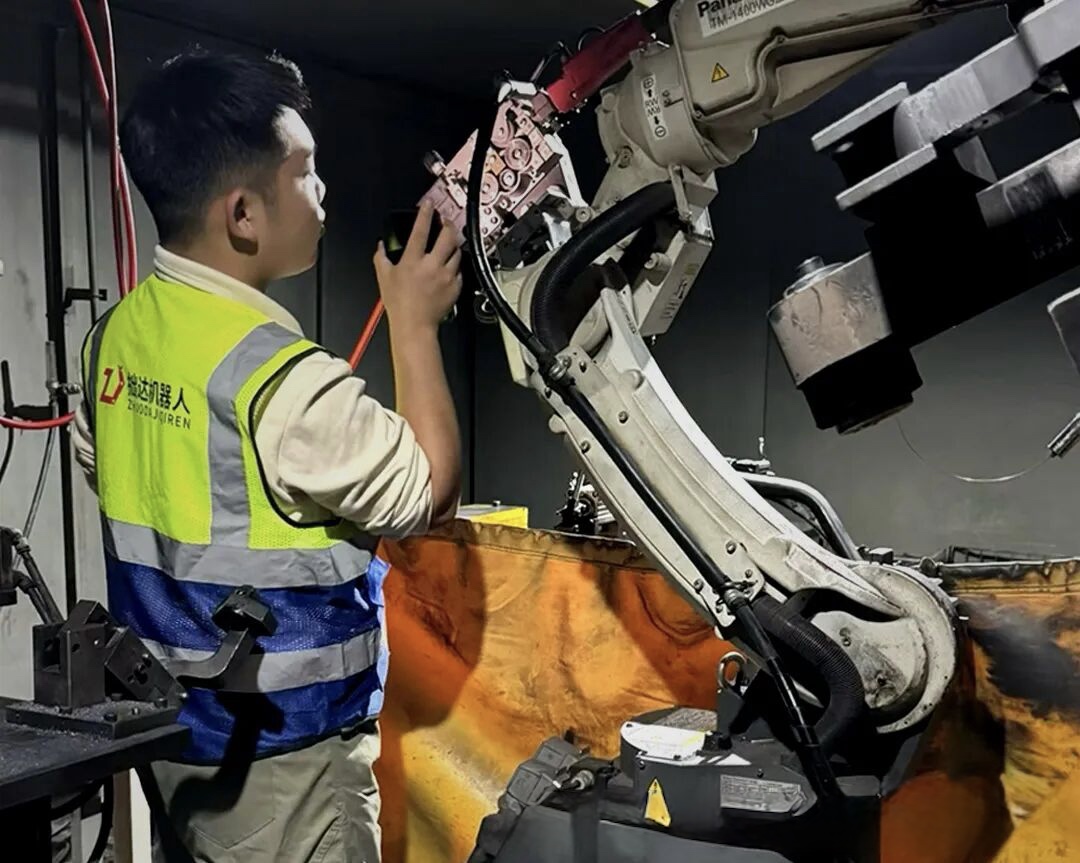
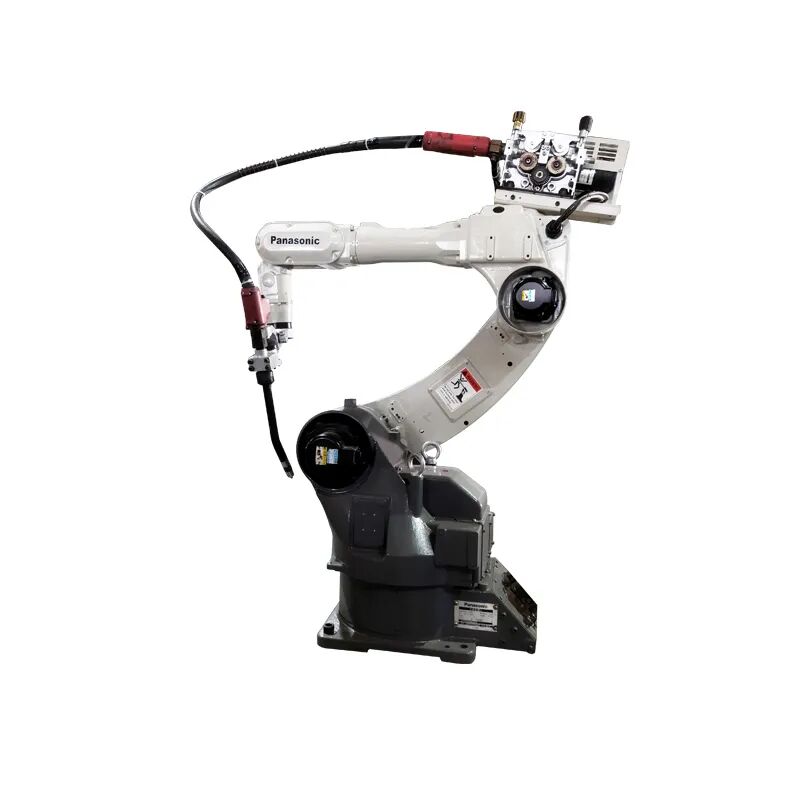
Panasonic TA1400 — A platform built around Panasonic's MIG/MAG process: smooth motion, low spatter, predictable bead appearance. → Sheet metal parts, e-bike and scooter frames, hardware in batch production.
Yaskawa MH24 — Mid-payload, fast and compact for its class. Often the right answer when one cell has to weld, palletize and assemble. → Mixed-process lines where flexibility matters more than specialized reach.
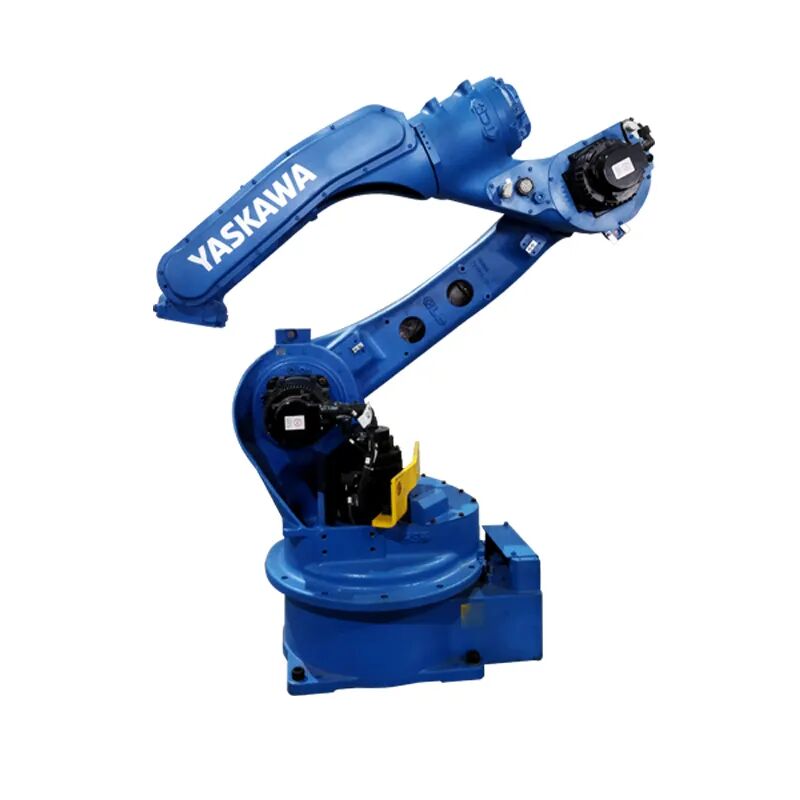
FANUC R-2000iB/165F — A rigid spot-welding workhorse with an upward wrist configuration and sealing for harsh environments. → BIW spot welding, heavy-duty handling alongside welding.
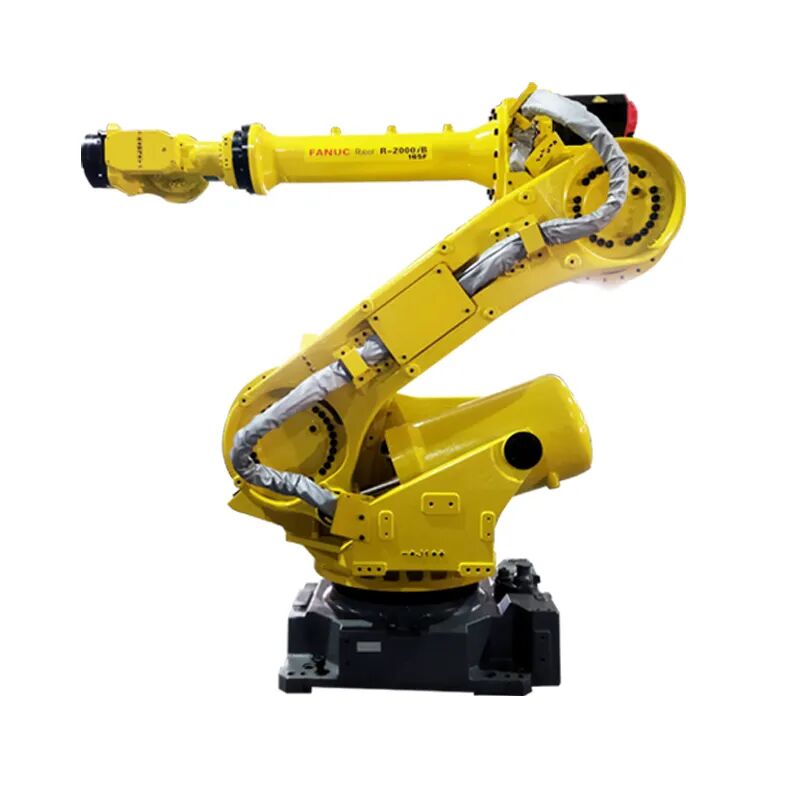
Kawasaki BX200L — Purpose-built for spot welding, with a hollow wrist for clean cable routing and good resistance to dust and spatter. → Automotive body and component spot welding lines.
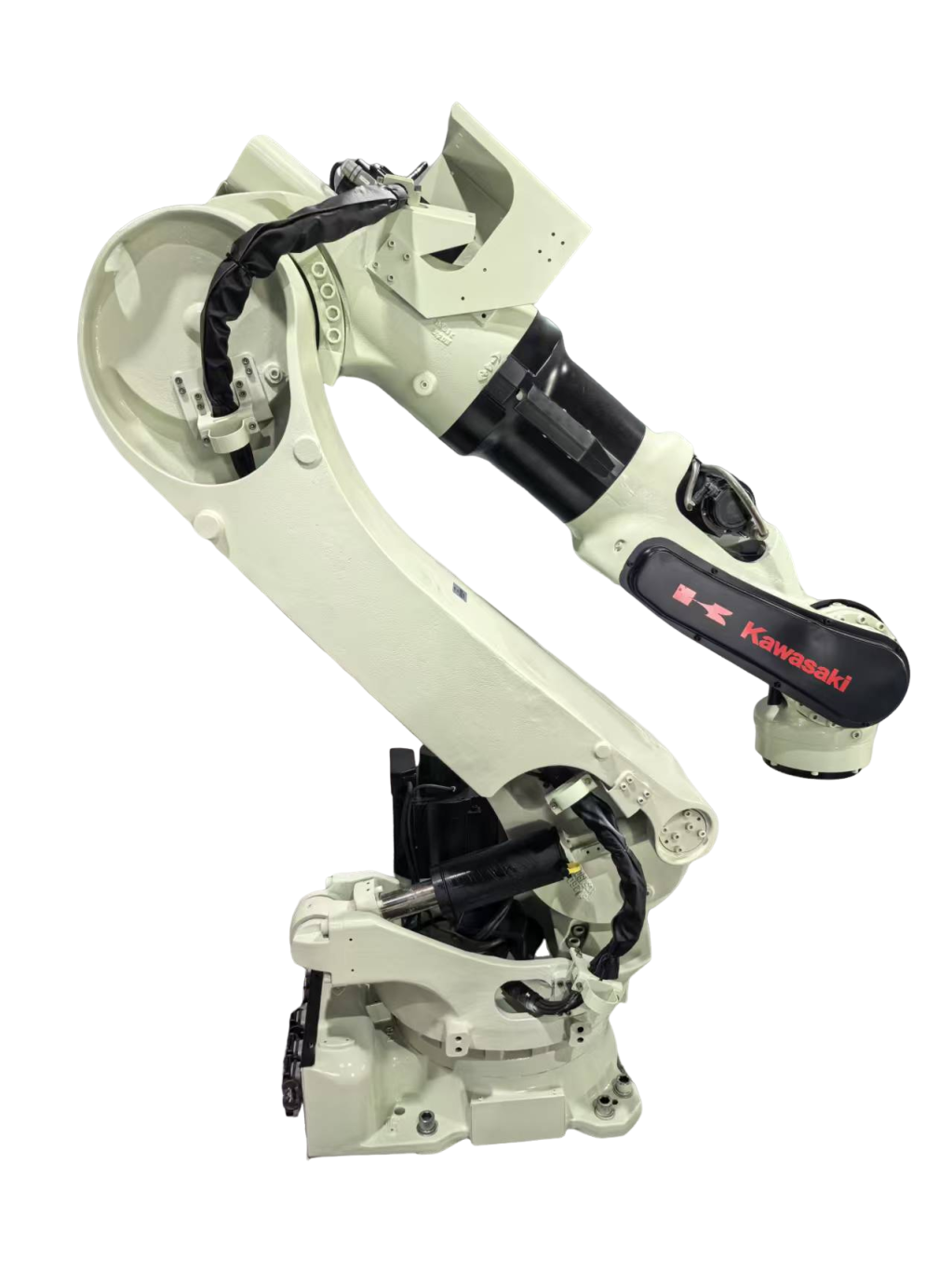
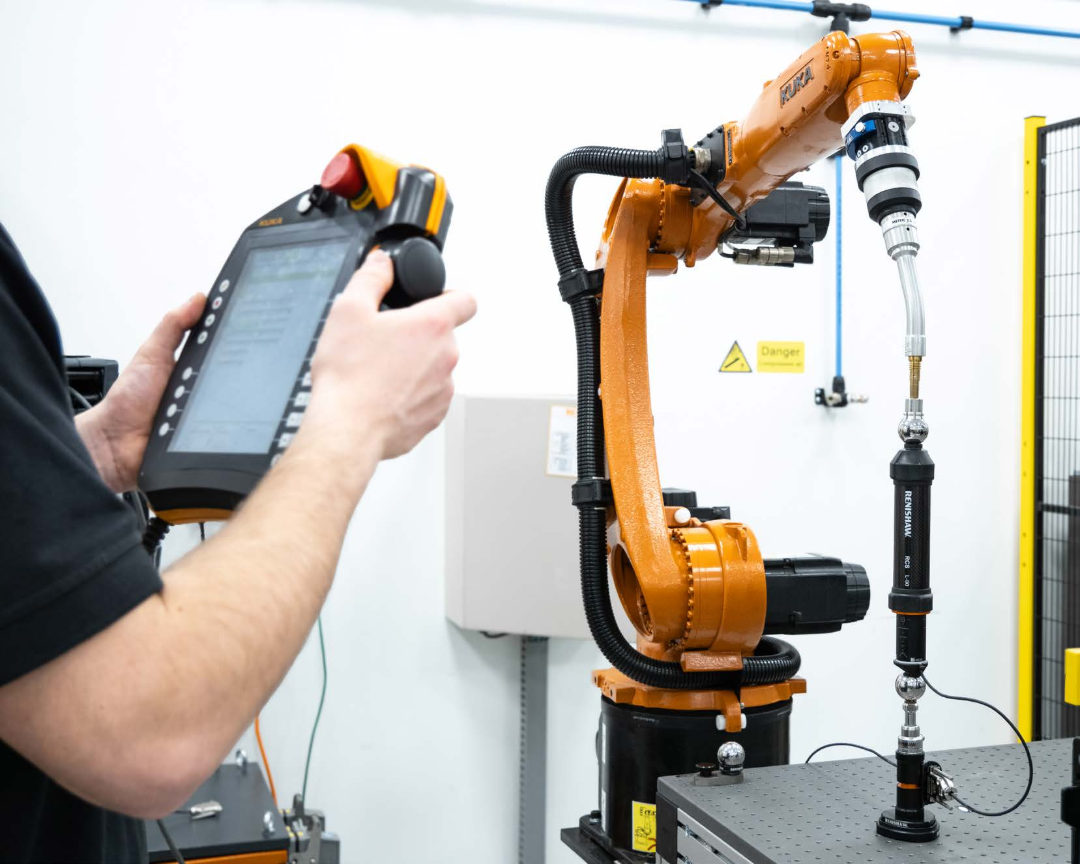
KUKA KR210R3100 — 3,096 mm of reach. One unit can cover several stations instead of one. → Large-span spot welding and flexible multi-station layouts.
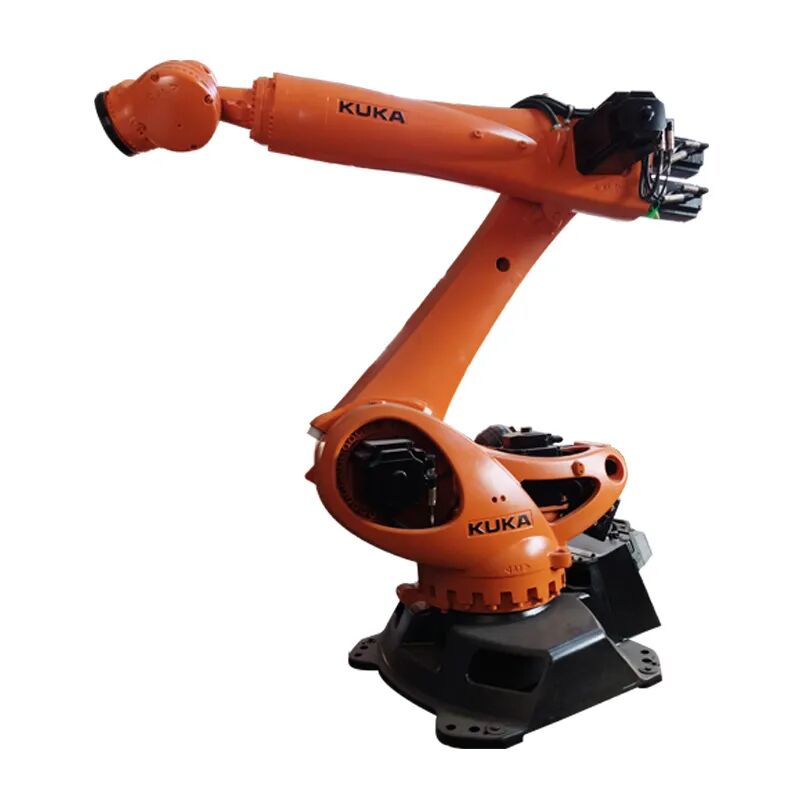
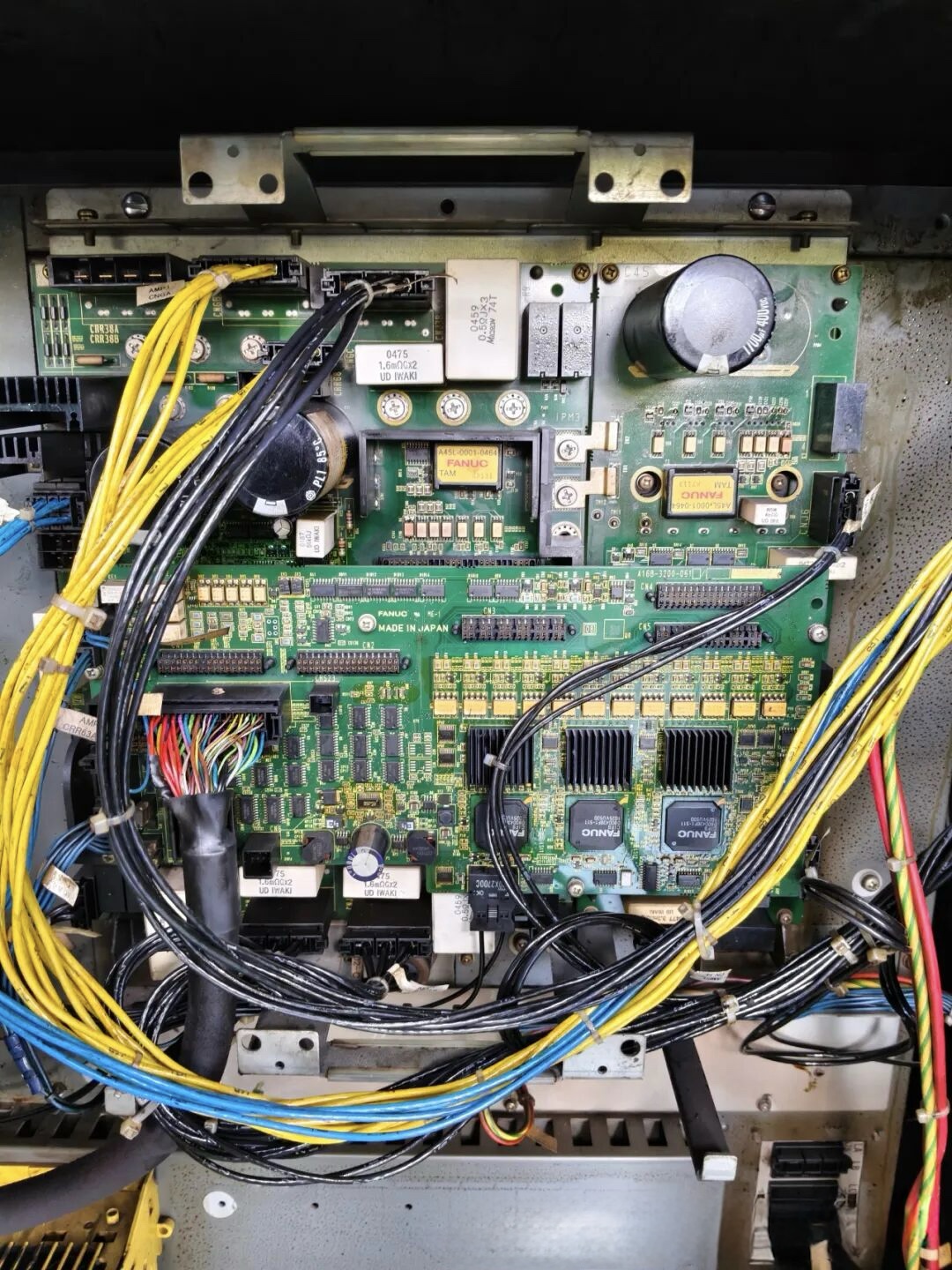
A note on buying used: condition is everything, and it is checkable. Ask for axis backlash readings, controller generation, and whether the software and documentation are intact. On older controller generations, confirm spare-part availability before you sign. A bargain robot with an unsupported controller is an expensive lesson.
05 The return isn't "one robot replaces one welder"
The value that shows up on the P&L isn't headcount. It's that quality stops depending on who is holding the torch that day. The parameters that made the first part good are the parameters that make the ten-thousandth part good.
That changes three things at once:
- Quality becomes data, not feel. Voltage, current, travel speed and gas flow are recorded and repeatable. When a customer audits, you show parameters, not assurances.
- Delivery becomes plannable. Output stops swinging with who is on shift, who is on leave, or who is chasing a deadline.
- The welders you keep move up. Fit-up, programming, quality control: the work that actually needs a decade of judgment. And the fume and arc exposure that made the job hard to fill drops sharply on the automated side of the cell.
That last point is underrated. The welder shortage isn't only a cost problem; it's a working-conditions problem. Automation is one of the few answers that improves both sides of it.
06 What you should know before you enquire
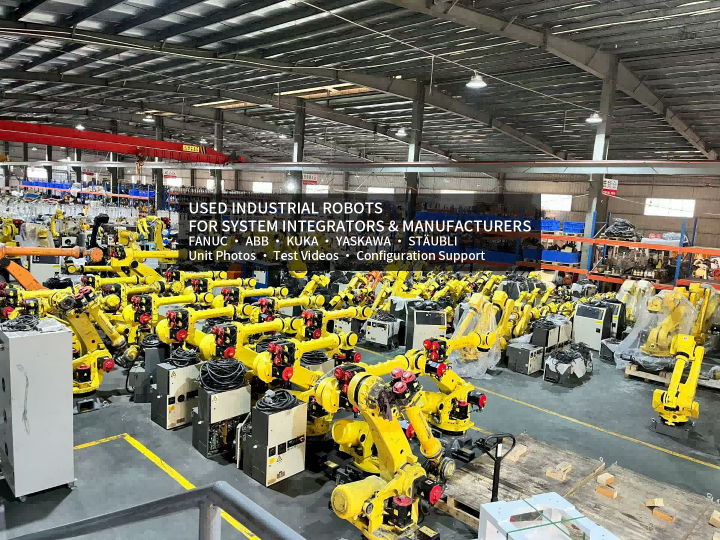
Availability and dispatch. Our group holds over 10,000 used industrial robots in stock. The website shows only part of the range: contact us to check availability for listed or unlisted models. Orders are normally dispatched within 5–7 business days after full payment is received. Orders requiring refurbishment or special preparation have a separately agreed dispatch schedule. International transit time is additional and depends on the destination, shipping method and customs clearance.
What we check before dispatch. Every robot is powered on and run before dispatch. We carry out full-load testing and accuracy testing, and we send you the testing video, photos, the nameplate details of the unit you will receive, and photos of the packing.
Refurbishment. Robots can be supplied in their existing condition or refurbished to an agreed scope at an additional cost. Refurbishment requirements, charges and the dispatch schedule are confirmed with the customer before the order is finalized.
Warranty and after-sales. For export orders we do not provide a standard warranty. We do provide after-sales technical support: our technicians help you investigate and troubleshoot any problem. Where a problem is confirmed to be our responsibility, we arrange an appropriate resolution, including replacement parts where necessary.
07 FAQ
Why is the year of manufacture not shown on the product pages?
Every unit we supply comes from a different plant and a different working history, so the year, operating hours and external condition differ from one robot to another. Instead of listing one specification for all units, we confirm the actual unit available, its year, its configuration and its condition, with you before the order is finalized.
How do you test a welding robot before shipping it?
Every robot is powered on and run before dispatch. We carry out operational testing, full-load testing and accuracy testing. We send the testing video and photos to the customer, together with the nameplate details of the unit they will receive and photos of the packing.
Can the robot be supplied with a welding package?
Yes. Torch, wire feeder and welding power source are matched to your process and material, and are quoted separately from the robot. The configuration is confirmed in the quotation.
Can the robot be refurbished?
Yes. We can supply the robot in its existing condition, or refurbish it to an agreed scope at an additional cost. The scope, the charge and the dispatch schedule are confirmed with you before the order is finalized.
Do you provide a warranty?
For export orders we do not provide a standard warranty. We provide after-sales technical support: our technicians help you investigate and troubleshoot any problem. Where a problem is confirmed to be our responsibility, we arrange an appropriate resolution, including replacement parts where necessary.
How fast can you ship?
Orders are normally dispatched within 5–7 business days after full payment is received. Orders requiring refurbishment or special preparation have a separately agreed schedule. International transit time is additional and depends on the destination, shipping method and customs clearance.
Request availability. Tell us the model, the quantity, the application and the destination country, and whether you need refurbishment. We will confirm what is available and come back to you with configuration, testing records and a quotation.
→ used-industrialrobots.com | bella@fanchengrobot.com